LA MONARCHIE CASTINIENNE
THE CASTINIAN MONARCHY
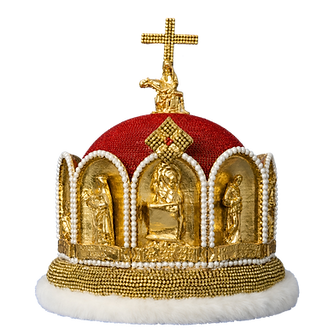
Le Neugraviat de Saint-Castin est une monarchie constitutionnelle héréditaire fondée sur des principes démocratiques et parlementaires. Depuis 2021, S.A.S. la Neugravine Marie-Philippe en est le chef de l’État et exerce les fonctions que lui confèrent la Constitution et les lois, aux côtés du Conseil législatif et du Gouvernement.
La monarchie castinienne naît en 2014, avec la création du Neugraviat de Saint-Castin. Louis-Philippe Ier en devient alors le premier Neugrave et le premier chef de l’État castinien. Après une période républicaine, la monarchie est rétablie le 1er octobre 2020 dans le cadre de l’actuelle Constitution.
La Couronne castinienne s’inscrit toutefois dans un héritage dynastique plus ancien. La Maison de la Voye—Boulanger fait remonter son histoire à la Nouvelle-France, puis à la Chiasmialie et au Valinois.
The Newgraviate of Saint-Castin is a hereditary constitutional monarchy founded on democratic and parliamentary principles. Since 2021, H.S.H. Newgravine Marie-Philippe has served as Head of State, exercising the functions entrusted to her by the Constitution and the laws alongside the Legislative Council and the Government.
The Castinian monarchy was established in 2014, with the creation of the Newgraviate of Saint-Castin. Louis Philippe I became its first Newgrave and first Castinian Head of State. Following a republican period, the monarchy was restored on October 1, 2020, under the present Constitution.
The Castinian Crown, however, forms part of a much older dynastic heritage. The House of de la Voye—Boulanger traces its history to New France, and later to Chiasmialia and Valinois.
.jpg)

MARIE-PHILIPPE
NEUGRAVINE DE SAINT-CASTIN
NEWGRAVINE OF SAINT-CASTIN
S.A.S. la Neugravine Marie-Philippe est née le 26 octobre 1956 à Saguenay. Fille du Neugrave Louis-Philippe Ier (1923-2020) et de Jeanne-d’Arc (1926-1992), elle appartient à la Maison de la Voye—Boulanger.
Avant son accession au trône, Marie-Philippe consacre plus de 35 ans au domaine de la santé comme infirmière dans différents établissements hospitaliers. Mariée à l’église Saint-Alphonse de Bagotville, au Saguenay, elle est mère de deux enfants et grand-mère de deux petits-fils.
À la suite du décès de son père, elle hérite de la Couronne de tous les saints le 9 janvier 2021, au terme d’un mois de deuil national. Le 26 octobre suivant, elle prête serment devant le Conseil législatif lors de son investiture comme Neugravine de Saint-Castin.
Son règne est placé sous le signe de la réserve, de l’impartialité et du rassemblement. Lors de son investiture, elle exprime sa conception du service en ces mots : « Ensemble, nous pouvons accomplir davantage et faire de Saint-Castin une référence et un modèle pour tous. Nous sommes peut-être une petite nation, mais nous savons voir grand. »
Son titre officiel est Son Altesse Sérénissime Marie-Philippe, Neugravine de Saint-Castin et de Valinois, seigneuresse de Chiasmialie et grande protectrice de l’Outaragasipi.
H.S.H. Newgravine Marie-Philippe was born on October 26, 1956, in Saguenay. The daughter of Newgrave Louis Philippe I (1923–2020) and Jeanne-d’Arc (1926–1992), she belongs to the House of de la Voye—Boulanger.
Before her accession to the throne, Marie-Philippe devoted more than 35 years to health care, working as a nurse in various hospitals. She was married at Saint-Alphonse Church in Bagotville, Saguenay, and is the mother of two children and grandmother of two grandsons.
Following the death of her father, she inherited the Crown of All Saints on January 9, 2021, at the conclusion of a month of national mourning. On October 26 of that year, she took the oath before the Legislative Council during her investiture as Newgravine of Saint-Castin.
Her reign is characterized by reserve, impartiality and unity. During her investiture, she expressed her understanding of service in these words: “Together, we can accomplish more and make Saint-Castin a reference and a model for all. We may be a small nation, but we know how to think big.”
Her official title is Her Serene Highness Marie-Philippe, Newgravine of Saint-Castin and Valinois, Lady of Chiasmialia and Grand Protector of Outaragasipi

LE ROLE DU CHEF DE L’ÉTAT
THE ROLE OF THE HEAD OF STATE
UNE FONCTION AU CŒUR DES INSTITUTIONS
AN OFFICE AT THE HEART OF THE INSTITUTIONS
Dans le cadre de la monarchie constitutionnelle, la Neugravine exerce les fonctions de chef de l’État conformément à la Constitution et aux lois. Ses attributions s’inscrivent dans un système où la Couronne, le Conseil législatif et le Gouvernement participent au fonctionnement des institutions.
La Neugravine prend part au pouvoir législatif en sanctionnant les lois adoptées par le Conseil législatif. Pour entrer en vigueur, celles-ci doivent également être contresignées par le chef du Gouvernement.
Elle exerce certaines attributions liées au pouvoir judiciaire, notamment la nomination des juges, et dispose du droit de grâce ainsi que des autres prérogatives conférées à la fonction neugraviale.
L’administration de l’État et la conduite des affaires gouvernementales relèvent du Gouvernement. Cette répartition des responsabilités distingue la fonction de chef de l’État de l’action gouvernementale.
Au-delà de ses attributions constitutionnelles, la Neugravine incarne la continuité de la Couronne et des institutions castiniennes. La réserve et l’impartialité associées à sa fonction lui permettent de représenter Saint-Castin au-delà des orientations politiques du moment.
Within the constitutional monarchy, the Newgravine exercises the functions of Head of State in accordance with the Constitution and the laws. Her responsibilities form part of a system in which the Crown, the Legislative Council and the Government participate in the functioning of the institutions.
The Newgravine takes part in the legislative process by sanctioning laws adopted by the Legislative Council. To enter into force, they must also be countersigned by the Head of Government.
She exercises certain responsibilities relating to the judiciary, including the appointment of judges, and holds the power of pardon as well as the other prerogatives vested in the Newgravial office.
The Government is responsible for the administration of the State and the conduct of government affairs. This division of responsibilities distinguishes the office of Head of State from the work of government.
Beyond her constitutional duties, the Newgravine embodies the continuity of the Crown and Castinian institutions. The reserve and impartiality associated with her office allow her to represent Saint-Castin beyond the political orientations of the day.

LOUIS-PHILIPPE I
PREMIER NEUGRAVE SOUVERAIN DE SAINT-CASTIN
FIRST SOVEREIGN NEWGRAVE OF SAINT-CASTIN
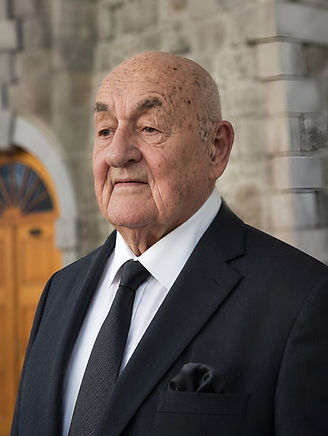
S.A.S. le Neugrave Louis-Philippe Ier est né le 28 janvier 1923 à Bagotville, au Saguenay. Fils du Neugrave George Ier Gonzague et de la Neugravine Rose-de-Lima, il grandit au sein d’une famille de 25 enfants. En 1976, il devient Neugrave de Valinois, titre qu’il conserve jusqu’à sa mort.
Durant la Seconde Guerre mondiale, Louis-Philippe participe à l’effort de guerre comme pilote de navire marchand, assurant le transport de marchandises sur les Grands Lacs, le Saint-Laurent et la côte atlantique. En 1950, il épouse Jeanne-d’Arc aux Méchins, en Gaspésie. Le couple s’établit ensuite à Bagotville et a trois enfants.
En 2014, avec la création du Neugraviat, Louis-Philippe devient le premier Neugrave de Saint-Castin et le premier chef de l’État castinien. Après la fin de cette première période monarchique, il exerce de nouveau la fonction de chef de l’État comme Régent de la République sérénissime.
Le 1er octobre 2020, à la suite d’un référendum et de l’adoption d’une nouvelle Constitution par le Conseil législatif, la monarchie est rétablie et Louis-Philippe redevient Neugrave de Saint-Castin.
Profondément attaché à sa foi et à sa communauté, il participe pendant de nombreuses années à la vie paroissiale de Bagotville.
Louis-Philippe Ier meurt le 9 décembre 2020 à l’Hôpital de Jonquière, à Saguenay, à l’âge de 97 ans. Sa fille, Marie-Philippe, lui succède en 2021.
H.S.H. Newgrave Louis Philippe I was born on January 28, 1923, in Bagotville, Saguenay. The son of Newgrave George I Gonzaga and Newgravine Rose-de-Lima, he grew up in a family of 25 children. In 1976, he became Newgrave of Valinois, a title he retained until his death.
During the Second World War, Louis Philippe contributed to the war effort as a merchant vessel pilot, transporting cargo along the Great Lakes, the St. Lawrence and the Atlantic coast. In 1950, he married Jeanne-d’Arc in Les Méchins, Gaspésie. The couple later settled in Bagotville and had three children.
In 2014, with the creation of the Newgraviate, Louis Philippe became the first Newgrave of Saint-Castin and the first Castinian Head of State. Following the end of this first monarchical period, he once again served as Head of State as Regent of the Serene Republic.
On October 1, 2020, following a referendum and the adoption of a new Constitution by the Legislative Council, the monarchy was restored and Louis Philippe once again became Newgrave of Saint-Castin.
Deeply devoted to his faith and his community, he participated in parish life in Bagotville for many years.
Louis Philippe I died on December 9, 2020, at Jonquière Hospital in Saguenay, at the age of 97. His daughter, Marie-Philippe, succeeded him in 2021.
DE LA NOUVELLE-FRANCE A SAINT-CASTIN
FROM NEW FRANCE TO SAINT-CASTIN
QUATRE SIÈCLES DE CONTINUITÉ DYNASTIQUE
FOUR CENTURIES OF DYNASTIC CONTINUIT

L’histoire de la Maison de la Voye—Boulanger s’étend sur près de quatre siècles, depuis l’établissement de René Ier en Nouvelle-France, en 1625, jusqu’à la Neugravine Marie-Philippe. Au fil des générations, la lignée s’enracine sur la côte de Beaupré, dans Charlevoix puis au Saguenay, avant d’être associée, à partir de 2014, aux institutions de Saint-Castin.
La chronologie distingue trois grandes périodes : la Chiasmialie, le Valinois et Saint-Castin. Elles appartiennent à une même histoire dynastique, tout en correspondant à des réalités historiques et institutionnelles distinctes.
De la Nouvelle-France à Chiasmialie
L’histoire de la lignée commence avec René Ier, venu de Rouen en 1625 et établi à Château-Richer, sur la côte de Beaupré. Son arrivée s’inscrit dans les premières décennies du peuplement de la Nouvelle-France, alors que les établissements français se concentrent principalement le long du Saint-Laurent.
Son fils René II, premier membre de la lignée né au pays, poursuit cet enracinement. La famille se déplace vers Charlevoix, où est fondée la Seigneurie de Chiasmialie dans la région de Baie-Saint-Paul. Sous Jacques Ier, celle-ci se consolide au XVIIIe siècle dans une société structurée autour des paroisses, du régime seigneurial et des échanges sur le Saint-Laurent.
La guerre de Sept Ans bouleverse cet ordre. Jacques II, seigneur de 1752 à 1758, soutient l’effort défensif de la Nouvelle-France et meurt peu avant la Conquête. Son successeur, Jean Ier, traverse le changement de régime et adapte les affaires familiales à l’administration britannique tout en préservant l’héritage français de la lignée.
De Charlevoix au Saguenay
Sous Damase, de 1785 à 1860, l’histoire familiale traverse l’époque du Bas-Canada et les transformations du XIXe siècle. Alors que les anciennes structures seigneuriales déclinent, la famille se tourne progressivement vers le Saguenay.
Ce mouvement, poursuivi sous Henri Ier, accompagne l’ouverture de la région à la colonisation et le développement de communautés permanentes autour de la baie des Ha! Ha! et de Bagotville.
En 1869, avec Eusèbes, commence la période des Neugraves de Valinois. Le titre neugravial succède à la tradition des seigneurs de Chiasmialie et accompagne désormais l’histoire de la lignée au Saguenay. Il demeure alors un titre dynastique : la fonction de chef de l’État castinien n’apparaît qu’en 2014.
Le Valinois et le Québec moderne
Sous Eusèbes, Éliphe, Joseph et George Ier Gonzague, la tradition valinoise traverse les transformations économiques et sociales du Saguenay. Le développement des infrastructures, de l’éducation et des institutions locales accompagne l’entrée de la région dans la modernité.
George Ier Gonzague, surnommé « l’Ingénieur », est particulièrement associé au développement des communications entre Charlevoix et le Saguenay. Ses successeurs, George II Alfred, Jean II et Henri II Paul, poursuivent la tradition neugraviale au cours du XXe siècle.
Plusieurs abdications marquent également cette période. Les transmissions volontaires de Joseph, George II Alfred et Jean II s’inscrivent dans une tradition familiale permettant de remettre la charge à la génération suivante.
En 1976, Louis-Philippe Ier devient Neugrave de Valinois, titre qu’il conservera pendant 44 ans.
La naissance de la monarchie castinienne
En 2014, la création du Neugraviat de Saint-Castin ouvre une nouvelle période : Louis-Philippe Ier devient le premier Neugrave de Saint-Castin et le premier chef de l’État castinien.
Après une période républicaine, la monarchie est rétablie le 1er octobre 2020. À la mort de Louis-Philippe, le 9 décembre suivant, sa fille Marie-Philippe lui succède en 2021.
Une histoire du Saint-Laurent et du Saguenay
De René Ier à Marie-Philippe, la chronologie retrace également un déplacement géographique : de Rouen à Château-Richer, de la côte de Beaupré à Baie-Saint-Paul, puis de Charlevoix au Saguenay.
Ce parcours croise plusieurs grandes périodes de l’histoire québécoise : la Nouvelle-France, le régime seigneurial, la Conquête, le Régime britannique, le Bas-Canada, la colonisation du Saguenay et le Québec moderne.
La frise résume cette évolution en trois couleurs : le jaune pour Chiasmialie et les origines seigneuriales; le rouge pour le Valinois et l’enracinement saguenéen; le bleu pour Saint-Castin et la monarchie contemporaine. Ces périodes ne représentent pas quatre siècles d’un même État ou d’une même fonction souveraine, mais les étapes successives de quatre siècles de continuité dynastique.
The history of the House of de la Voye—Boulanger spans nearly four centuries, from the establishment of Renatus I in New France in 1625 to Newgravine Marie-Philippe. Over successive generations, the family became rooted in the Côte-de-Beaupré, Charlevoix and then the Saguenay before becoming associated, beginning in 2014, with the institutions of Saint-Castin.
The chronology distinguishes three major periods: Chiasmialia, Valinois and Saint-Castin. They form part of the same dynastic history while reflecting distinct historical and institutional realities.
From New France to Chiasmialia
The history of the line begins with Renatus I, who came from Rouen in 1625 and settled at Château-Richer on the Côte-de-Beaupré. His arrival took place during the early decades of settlement in New France, when French communities were concentrated primarily along the St. Lawrence River.
His son Renatus II, the first member of the line born in the colony, continued these North American roots. The family moved into Charlevoix, where the Seigneurie of Chiasmialia was established in the Baie-Saint-Paul area. Under James I, it became firmly established during the 18th century within a society shaped by parishes, the seigneurial system and trade along the St. Lawrence.
The Seven Years’ War disrupted this order. James II, Seigneur from 1752 to 1758, supported the defence of New France and died shortly before the Conquest. His successor, John I, lived through the change of regime and adapted the family’s affairs to British administration while preserving the line’s French heritage.
From Charlevoix to the Saguenay
Under Damasus, from 1785 to 1860, the family’s history spanned the era of Lower Canada and the transformations of the 19th century. As the old seigneurial structures declined, the family gradually turned toward the Saguenay.
Continued under Henry I, this movement coincided with the opening of the region to settlement and the development of permanent communities around Ha! Ha! Bay and Bagotville.
In 1869, with Eusebius, the period of the Newgraves of Valinois began. The Newgravial title succeeded the tradition of the Seigneurs of Chiasmialia and thereafter accompanied the history of the line in the Saguenay. At this time, it remained a dynastic title: the office of Castinian Head of State would not emerge until 2014.
Valinois and Modern Quebec
Under Eusebius, Eliphas, Joseph and George I Gonzaga, the Valinois tradition spanned the economic and social transformation of the Saguenay. The development of infrastructure, education and local institutions accompanied the region’s transition into the modern era.
George I Gonzaga, known as “the Engineer,” is particularly associated with the development of transportation links between Charlevoix and the Saguenay. His successors, George II Alfred, John II and Henry II Paul, continued the Newgravial tradition through the 20th century.
Several abdications also marked this period. The voluntary transfers by Joseph, George II Alfred and John II reflect a family tradition of passing the office to the next generation.
In 1976, Louis Philippe I became Newgrave of Valinois, a title he would retain for 44 years.
The Birth of the Castinian Monarchy
In 2014, the creation of the Newgraviate of Saint-Castin opened a new period: Louis Philippe I became the first Newgrave of Saint-Castin and the first Castinian Head of State.
Following a republican period, the monarchy was restored on October 1, 2020. After Louis Philippe’s death on December 9 of that year, his daughter Marie-Philippe succeeded him in 2021.
A History of the St. Lawrence and the Saguenay
From Renatus I to Marie-Philippe, the chronology also traces a geographical journey: from Rouen to Château-Richer, from the Côte-de-Beaupré to Baie-Saint-Paul, and then from Charlevoix to the Saguenay.
This journey intersects with several major periods in Quebec history: New France, the seigneurial system, the Conquest, British rule, Lower Canada, the settlement of the Saguenay and modern Quebec.
The timeline summarizes this evolution through three colours: yellow for Chiasmialia and the seigneurial origins; red for Valinois and the family’s roots in the Saguenay; and blue for Saint-Castin and the contemporary monarchy. These periods do not represent four centuries of a single state or sovereign office, but rather the successive stages of four centuries of dynastic continuity.
LA MAISON NEUGRAVIALE
THE NEWGRAVIAL HOUSE
THE DYNASTY AND THE CROWN
LA DYNASTIE ET LA COURONNE
La Maison neugraviale désigne la lignée dynastique dont est issue la famille régnante de Saint-Castin. Elle est aujourd’hui représentée par la Maison de la Voye—Boulanger, à laquelle appartient la Neugravine Marie-Philippe.
La Maison neugraviale et la Couronne constituent deux réalités distinctes. La première représente la lignée familiale et dynastique; la seconde est une institution de l’État. La Neugravine est la titulaire de la Couronne et exerce, à ce titre, la fonction de chef de l’État conformément à la Constitution.
La succession à la Couronne est héréditaire. La Constitution reconnaît la dynastie rénatine de la Voye—Boulanger—Legendre et prévoit que l’ordre de succession est régi par une loi de la Maison neugraviale.
Cette organisation permet de distinguer l’héritage propre à la dynastie de la fonction constitutionnelle attachée à la Couronne de Saint-Castin.
The Newgravial House refers to the dynastic line from which the reigning family of Saint-Castin descends. It is represented today by the House of de la Voye—Boulanger, to which Newgravine Marie-Philippe belongs.
The Newgravial House and the Crown are two distinct concepts. The former represents the family and dynastic line, while the latter is an institution of the State. The Newgravine is the holder of the Crown and, in that capacity, serves as Head of State in accordance with the Constitution.
Succession to the Crown is hereditary. The Constitution recognizes the Renatine dynasty of de la Voye—Boulanger—Legendre and provides that the order of succession is governed by a law of the Newgravial House.
This distinction separates the dynasty’s historical heritage from the constitutional office attached to the Crown of Saint-Castin.